Why Your Competitors are Thriving and You’re Not!

Why Your Competitors are Thriving and You’re Not!

What are your competitors doing that you don’t know about?

That might sound like a paranoid question, but it’s not. It’s a marketing must. If you don’t know what your top competitors are up to, you can’t beat them. It’s that simple.

Of course, you can’t expect the competition to turn over secrets to you – but you don’t need them to do that to be informed. All you need to do is observe, think, and ask a few key questions about what they’re doing.

Where Are They Marketing Themselves?

The first thing you need to know is where and how they’re finding customers. You don’t need a copy of their marketing blueprint to figure it out. Here are some suggestions.

  • Check out their website and make note of their most important keywords. You probably have some keywords in common, but you should still look at their content to figure out which words they’re targeting.
  • Search the keywords you’ve identified on Google and Bing to see if they’re advertising with either search engine.
  • Search social media sites like Facebook, Twitter, Instagram, and LinkedIn to look at their profiles and see the kind of content they’re sharing. Your Google search may also turn up a few retargeting ads for you to check out.
  • Track their social media mentions.

You may want to create a spreadsheet to track who’s marketing where – and how they’re doing it. Don’t forget to check sites like Tumblr, Snapchat, and Reddit. They don’t get mentioned as often as Facebook and Instagram, but they still offer marketing opportunities.

Marketing

What Makes Them Unique?

You’ve spent some time figuring out how to distinguish yourself from your competitors – but how do they distinguish themselves from you?

A brand’s Unique Value Proposition tells you a lot about how they see themselves. Are they branding themselves as innovators? Solid and reliable? Affordable? Luxury?

You can pick up a lot of clues about your competitors’ unique qualities by looking at their websites and ads. What you learn can help you figure out how to be more competitive.

What Marketing Techniques Are They Using?

It’s not enough to know where your competitors are putting their marketing dollars. You also need to know what they’re doing with it. It can take some time to get a handle on their strategy, but it will be time well spent.

You may notice that they’re running both search engine ads and retargeting ads. That may indicate that their target audience requires a lot of nurturing before they buy. Or, you may notice that they’re relying heavily on customer-created content on social
media, and that could inspire you to create some brand ambassadors of your own.

You should also make note of the kinds of content that performs best for them in terms of engagement. Are they posting lots of videos or sticking mostly to photos? Are they using infographics or instructographics? Every technique they use could point in the direction of more effective marketing for you.

What Are Their Strengths and Weaknesses?

As you observe your competitors’ marketing and check out their websites, you’ll probably notice that there are some things they do exceptionally well. Maybe they’ve got killer blog posts that fans love and that get tons of shares on social media. Or, maybe they’ve got a YouTube channel with hundreds of useful videos.

At the same time, you should look for things they’re not doing so well. Maybe their website’s out of date or their social media posting is irregular. Maybe they haven’t done a good job of differentiating themselves in the market.

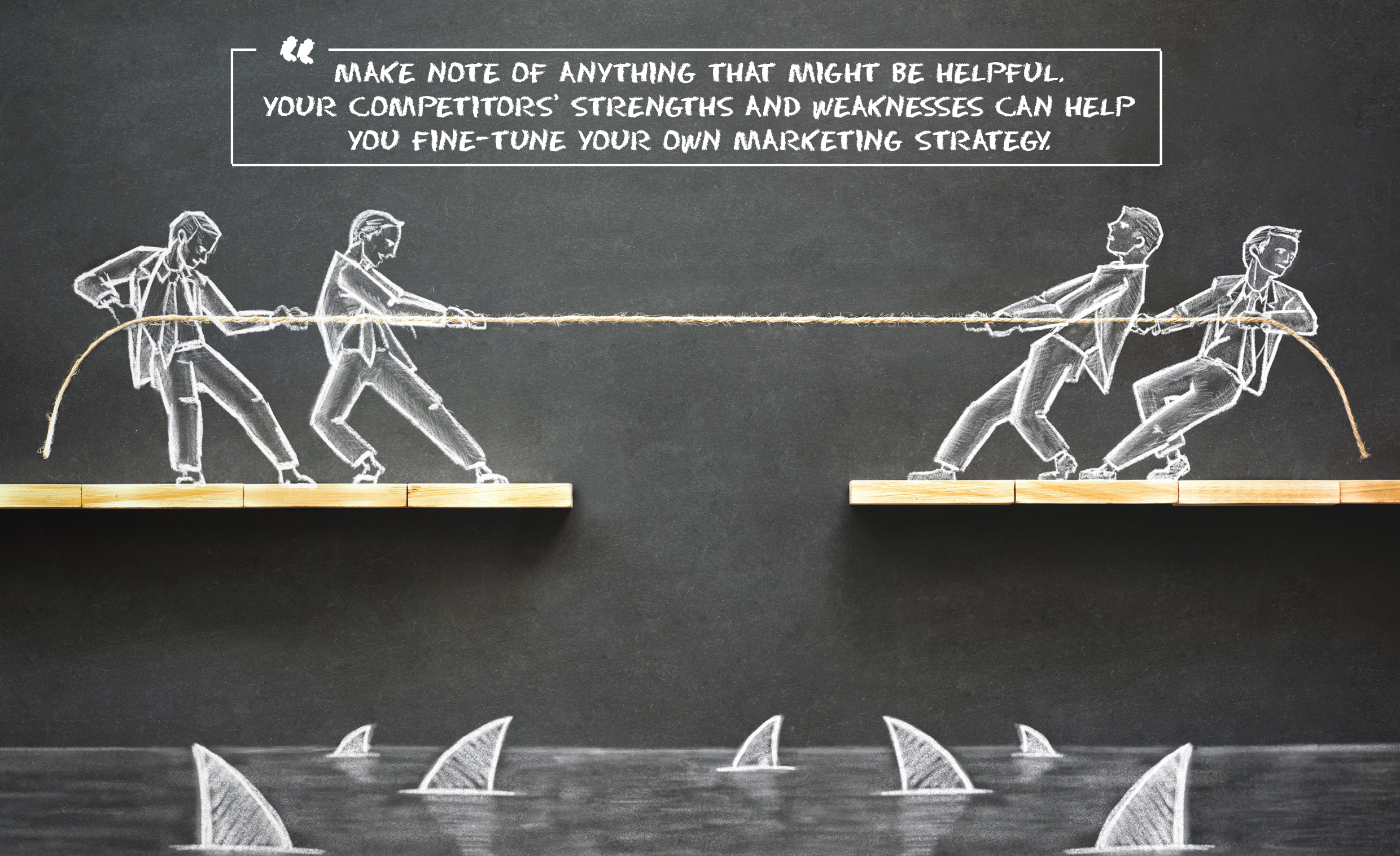
Make note of anything that might be helpful. Your competitors’ strengths and weaknesses can help you fine-tune your own marketing strategy.
Marketing Strength

What What Are Their Values?

It’s become increasingly important to consumers to know that the brands they buy have a moral center. You know that because you’ve seen the way brands can suffer when they misbehave. Customers can turn on brands in a flash if they feel they don’t share their core values.

If your competitors are affiliated with causes or charities, it’s important to know about it. You should look especially hard at any marketing efforts that tout their involvement and values. It’s quite common for brands to dedicate pages on their websites to their charitable efforts and values.

Millennials put a very high premium on corporate values both when they seek employment and when they shop. If you’re not clearly articulating your values and your competitors are, you might be at a disadvantage.

Keep in mind that when you express your values, you should look for causes that align with them. For example, a lot of food manufacturers and restaurants get involved with local food pantries and soup kitchen or sponsor food drives for hungry families.

How Do They Engage Fans?

Perhaps the most important question to ask is what your competitors are doing to engage their followers and fans. Engagement can mean a lot of different things from reading a Facebook post to creating unique, brand-based content – but it matters at every level.

One of my favorite ways to track engagement is to look at my competitors’ CTAs on social media. What are they asking fans to do? They might:

  • Ask fans to vote by asking them to like a post for one option and share it for the other.
  • Ask a question and encourage fans to answer in the comments.
    Sponsor a contest and give entries to fans who like, comment, and share their posts.
  • Ask fans to create content and use a special hashtag they’ve created for that purpose.

You can also make note of the kind of content that gets the most engagement. Do they get five times as many likes on the videos they share as on photographs? Are they sponsoring contests to incentivize engagement? These are all good questions to ask.
marketing
How to Cash in with Snapchat (Local Business Edition)

How to Cash in with Snapchat (Local Business Edition)

Snapchat is just for teens, right?

Wrong!

While Snapchat isn’t as big as Instagram or Facebook, it’s still a huge social media site with millions of users. And if your target audience includes Millennials, then you can’t afford to ignore Snapchat.

The trick, of course, is knowing if Snapchat is right for your business – and if it is, how you should be using it in your marketing.

snapchat

What these numbers should tell you is that Snapchat is a huge, untapped source for marketing. You probably won’t reach as wide a cross-section of your target audience as you might on Facebook, but you’ll have less marketing competition – and a better chance of grabbing their attention.

Create a Snapchat Business Account

Ready to use Snapchat for marketing. You’ll need to start by setting up a Snapchat business account. The process is very easy. 

  • You’ll be prompted to enter your:
  • First name and last name
  • User name (this should be your business name or brand name)
  • A password
  • Your phone number
  • Your birth date

Once your account is set up, you can attract followers, post content, and create marketing campaigns to help you achieve your goals.

Grow Your Audience

Attracting new followers on Snapchat isn’t difficult but you’ll need to do a bit of work. The first and easiest things you can do are:

  • Add a Snapchat follow icon to your website
  • Include your Snapchat ID and a follow link in your marketing emails and texts
  • Post about your new Snapchat account on your other social media accounts

After you do that, you can also use some in-app tools to attract new followers. Snapchat allows users to send Snapcodes to users. You can also send ‘Add Me URLs’ to the people in your target audience.

We’ll talk about paid advertising a little later in this article.

Create Snapchat Stories

Snapshot Stories are Snaps that are meant to be viewed sequentially. Unlike stand-alone Snaps, which disappear almost immediately, Snapshot Stories live on the site for 24 hours before vanishing. They’re an ideal way to connect with your audience.

You should make sure to give your Snapchat Story a compelling narrative arc. Some of the Snapchat Stories I’ve seen businesses use include:

  • Behind the scenes footage or tours
  • Expert tips
  • Fun facts
  • Product demos
  • Teasers
  • Testimonials
  • Live events
  • Special offers and coupons

When you create your Snapchat Story, remember that it should be fun. Make ample use of Snapchat’s stickers, text, and doodles. You should create your Snapchat Story with a specific marketing goal in mind and then have someone review it before you post it. Your goal is to create something entertaining and effective.

All the content you share on Snapchat should meet the site’s technical specifications. They are:

  • File size should be a maximum of 5MB for images and 32MB for videos
  • Image files should be in .jpg or .png format
  • Video files should be in .mp4 or .mov format and H.254 encoded
  • Full screen canvases should have 1080 x 1920 pixels and a 9:16 aspect ratio

Adhering to these specs will ensure that your content is high quality – something that Snapchat’s sophisticated users will appreciate.

snapchat

You can find a massive list of Snapchat hacks here.

Track and Refine Your Results

Like other social media platforms, Snapchat has some useful analytics that you can draw on when you pay for advertising. You can use them to track:

  • Clicks to your website
  • Clicks to your app
  • Website conversions
  • Catalog sales
  • Engagement
  • Video views
  • Lead generation

You can find complete details about Snapchat ads and policies by clicking here.

Once you’ve started using Snapchat for Business, you should keep an eye on the above results. You can use them to refine your Snapshot marketing strategy. You may notice that your video Snaps are getting far more engagement than your other content and adjust your marketing budget accordingly.

Marketing on Snapchat can give you a leg up on your competitors…

Remember, only a little over a quarter of businesses in the United States are using Snapchat. If your competitors aren’t – and they probably aren’t – then you can get access to a huge audience of Millennials and grab them as customers before your competitors know what hit them!
Four Steps to Turn Fans into Brand Ambassadors

Four Steps to Turn Fans into Brand Ambassadors

In a perfect world, everyone who buys your products would talk about them to everyone they meet.

The problem is, we don’t live in a perfect world. And, while some of your customers might be ardent fans, others may need a bit of coaxing to get there.

The good news?

You can turn customers into enthusiastic brand ambassadors in just four easy steps.
That might sound too good to be true, but it’s not. The trick is knowing what makes someone a brand ambassador – and then leading them down the road instead of hoping they’ll get there on their own.

What Can Brand Ambassadors Do for You

Brand ambassador

Brand ambassadors are more than just enthusiastic fans. When brand ambassadorship is at its best, customers identify heavily with the brands they love.

One example is Apple customers. You’ve probably noticed that they:

  • Associate the brand with their self-image
  • Assign traits of the brand to themselves
  • Eagerly await the release of new products

Apple might be an extreme example because it’s a big company, but brand ambassadors can do a lot to increase awareness of your brand. They can give you a competitive advantage in your industry. If you’ve got fans who talk about you all the time, you’re getting free advertising from them every time they mention you.

Brand ambassadors can also help you build customer loyalty. Knowing that others are enthusiastic about your products can increase their perceived value. A truly enthusiastic fan can even create new Brand ambassadors for you.

What Does Engagement Have to Do with It

You know that engagement is the Holy Grail of social media marketing. What you might not know is what engagement means nowadays. Your engagement might be up while your sales are down – and when that’s the case, it’s hard to get excited about a few hundred likes on Facebook or Instagram.

Not all engagement is the same. There are levels and you must understand them if you want to understand how to create brand ambassadors. Here’s how I break it down:

  • Stage 1 engagement: casual observers. These are people who read your Tweets or view your Instagram photos without commenting, liking, or sharing. They see your content but don’t do anything about it.
  • Stage 2 engagement: simple supporters. These are people who like your posts but don’t comment or share them.
  • Stage 3 engagement: conversationalists. These are customers who comment on your posts or, in some cases, DM or email you directly. The dialogue might be brief but it’s a step up and requires effort on the part of the customer.
  • Stage 4 engagement: broadcasters. These are the fans who share your content with their social media followers or post reviews of your products online. They’ve taken a step beyond casual support to try to share their passion for your brand with others.
  • Step 5 engagement: cheering section. These are fans who will go out of their way to come to events that you sponsor, whether they’re livestreams or in-person events.
  • Step 6 engagement: superfans. These are customers who create content that you can share and use to bolster your brand. Think of the people who post Instagram content at the request of a brand or show off their purchases online.

Your goal, of course, is to get as many people to step 6 as possible.

The Four Steps to Brand Ambassadorship

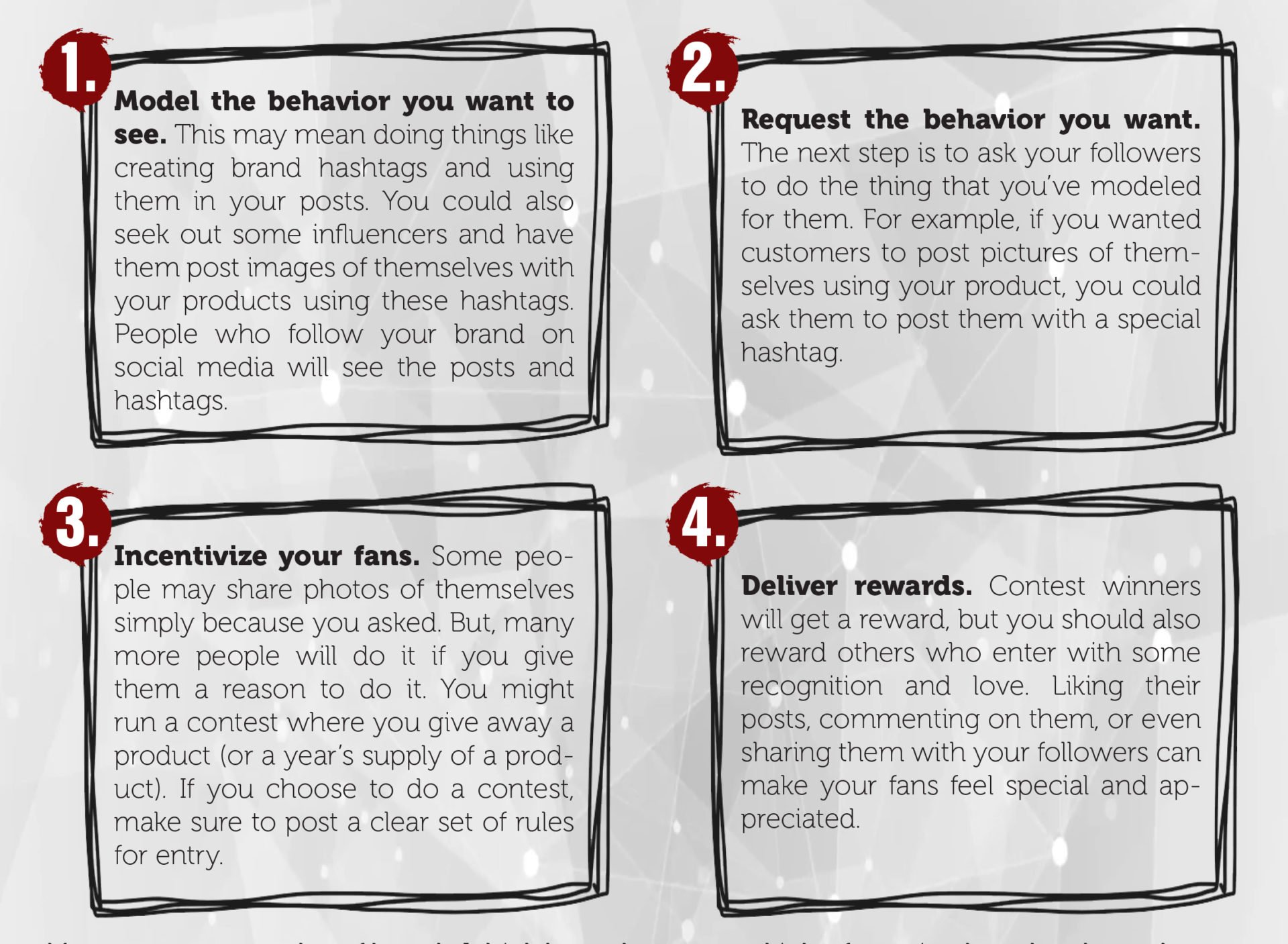
As I said before, there are four steps you can follow to create brand ambassadors. They’re not difficult, but they do require some planning and persistence on your part.

Brand Ambassadorship

Here are two examples of brands I think have done a good job of creating brand ambassadors.

Starbucks runs a white cup contest on Instagram every year. They challenge fans to create designs on plain white cups and post photos of them. The company shares the posts with their fans and produces a limited-edition run of the winning design.

Beauty brand Dove often asks its fans to tell stories about themselves and their families. They’ve run Mother’s Day promotions where they request information about customers’ mothers and then create one-of-a-kind social media “cards” for them.

What you can see from these ideas is that fans will engage with your brand if you ask them, incentivize them, and reward them.

Your brand ambassadors are waiting to be inspired…

It’s time to start thinking about what’s going to convince your current customers and followers to embrace your brand as ambassadors.

Not sure where to start? Try asking on social media! Your fans who are already engaged will be eager to tell you what they want – and you can use their advice as guidance to get things started.

7 Ways You Can Market Your Business Better

7 Ways You Can Market Your Business Better

Is your marketing strategy helping you accomplish your goals?

I’m willing to bet it isn’t – at least not all of them. And, if it’s not, that means there are things you could be doing better.

The tricky thing, of course, is figuring out what those things are. It’s not like they’re going to walk up and announce themselves to you, right? (But wouldn’t it be great if they did?)

Since you can’t count on marketing suggestions knocking on your door, let me help. Here are 7 things you can start doing right now to market your business better.

#1: Identify Your Unmet Goals Where You Expected to Do Better

The first step is to review your marketing plan and business plan and figure out what you still haven’t accomplished. You might have specific goals that remain out of reach, like attracting a certain number of new customers this year or passing a profit milestone.

Even if you haven’t articulated a goal, you might still feel disappointed about some of your marketing. Maybe readers aren’t finding your blog or you’re not getting as many people to sign up for your newsletter as you’d hoped.

Whatever it is that isn’t meeting your expectations, write it down.

#2: Update Your Market Research

The answers to marketing difficulties are nearly always found in the data. If it’s been a while since you conducted any serious market research, it’s time to retest those waters and see what’s new.

You should be gathering two sets of information about the people in your target audience. They are:

  • Demographic information, including age, gender, marital status, education, income, and geographical location; and
  • Psychographic information, including likes, dislikes, problems, concerns, and preferences.

The information you collect is what you’ll use to revamp your marketing to connect with the people most likely to buy from you.

market research

#3: Sneak a Peek at Your Competitors’ Marketing

Competitor research doesn’t get enough attention, and if you’ve never checked out your competitors’ marketing for ideas, you’re missing out.

You should be looking to see:

  • How they differentiate themselves from their competitors
  • Which keywords they’re targeting
  • Which social media sites they’re using
  • How many followers they have
  • Where they’re spending money on advertising
  • How they get customers to engage with them

This is such an important topic that I wrote a whole article about it this month. Make sure you don’t take your competitors for granted.

#4: Find Out Where Your Target Audience Is

Once you’ve evaluated your competitors, it’s time to start thinking about where to focus your marketing efforts to reach your target audience. For example, if your customers are mostly women and you have an aspirational product, then your marketing budget will be well spent on Pinterest. If you’re a B2B company, you should focus on LinkedIn.

You’ll also want to think beyond social media and ask how your target audience will find you. Remember that voice search is on the rise and think about where people are going to look for your products – and how they’ll do it.

target audience

#5: Revamp Your Marketing Plan

This is step is a big one – but it’s necessary if you want to achieve your marketing and growth goals. Take all the information you’ve gathered and sit down and rethink your marketing plan. You should be planning:

  • Which short-term and long-term goals are most important to you
  • How much money you’re prepared to spend to achieve them
  • What methods you will use to reach your goals (content marketing, email marketing, retargeting, etc.)
  • Which platforms you want to use (Facebook, Twitter, Pinterest, Google, Bing, etc.)
  • What kind of content you will create
  • How you will track your results and measure your goals

In other words, this should be a complete, soup-to-nuts plan of how you will achieve your goals.

#6: Automate as Much as Possible

Marketing automation can save you a ton of time and money as you work to achieve your goals. If you try to do everything yourself, you may wind up missing deadlines or failing to keep up with your intentions.

I’m a big believer in email automation for marketing. There are tons of good marketing email providers, including companies like AWeber and Constant Contact. You can use them to create email sequences to send out to your subscribers – or hire someone to create them for you.

I also suggest using automation to monitor your social media mentions and post on Facebook, Twitter, and other social media sites. You’ll need to set up the posts and schedule them, but the beauty of this approach is that it means you don’t need to worry about remembering when to post something. The automation will do it for you.
You may also want to consider setting up automatic replies on your Facebook page. Lots of companies use bots to handle customer questions and increase engagement – and you should think about it, too.

#7: Test Everything (and I Do Mean Everything)

The final step is not to assume that your new marketing plan is perfect. Even seasoned marketers make mistakes. They guess wrong and need to correct course.
Tracking your results will help you figure out what’s working and what isn’t. You should know:

  • How many people open the emails you send
  • What your click-through and conversion rates are
  • Which social media posts get the most engagement

Once you know which efforts aren’t delivering, you can test new versions of them. For emails, it might mean testing new headlines, content, and calls to action. Or, if you notice that video content gets three times as much engagement on Facebook as everything else you do, you may need to revisit your marketing budget and allot more resources to video.

market your business

And there they are…

Marketing isn’t an exact science but doing these 7 things can help you realign your marketing strategy with your most important business goals – and at the same time, increase your profits and help you attract new customers.
Here’s Why Your Business Isn’t Growing!

Here’s Why Your Business Isn’t Growing!

Your business is in a rut.

And guess what? Even if it isn’t right now, it will be some day. It happens to every business. The marketing techniques that worked last year, or last month, are no longer as effective as they used to be. You try everything you can think of, but it doesn’t work.

You’re stuck.

But, the good news is that it doesn’t need to be that way. When your business gets stuck and stops growing, there are things that you probably aren’t doing that you can do to kick things back into high gear.

Ready to get things going again? Here are some of the most common things that cause business to stagnate.

You Don’t Have an Email List

This one’s a biggie for me – so much so that one of the first questions I ask new clients is:

Do you have an email list?

I’m always amazed when people don’t. It’s so easy to do and email marketing earns great returns. There’s really no excuse for skipping email marketing as a method of growing your business.

And, here’s the thing. It is very easy to build a list. All you need to do is come up with a lead magnet that’s designed to appeal to your target audience. It could be a short report or eBook, a cheat sheet, a tip sheet, a value-packed video, or even a template.

Then, you create a landing page around your cheat sheet, advertise it, and boom! You’ve got an email list.

email list - grow your business

You’re Dialing in Your Marketing Strategy

Let’s face it – most small business owners don’t have a ton of time for marketing. They might set aside an hour or two to deal with it each week, but it’s often the first thing to get pushed aside when time is tight.

I get why that is, but it’s a mistake. A big one. Why? Because marketing is one of the best ways to engage with your existing customers and attract new ones.

If it’s been a while since you revamped your marketing strategy, here are some tips to help you get back on track.

  • Analyze your current marketing campaigns to see which ones have stopped working. If you’re not getting a great conversion rate, then keeping a campaign running is a waste of your money.
  • Come up with some killer content that’ll appeal to your target audience. It could be a video, a blog post, or an infographic. Just make sure that it’s irresistible and actionable.
  • Build a marketing campaign around your new content. Use whatever platforms will allow you to reach your target audience. They could include Facebook ads, Google AdWords, or even native advertising.
  • Test each element of your campaign and track the results. Testing can be time-consuming, but it’s truly the best way to fine-tune your campaigns until they’ve delivering the results you need.

Most importantly, make tracking your campaigns an ongoing concern. When a campaign stops delivering stellar results, make a change immediately.

You Don’t Have a Referral Program

If you’re not asking your existing customers for referrals, you’re making a big mistake. Referrals are a great way to attract new customers. They’re free (or pretty close to it) and they allow you to turn your valued customers into ambassadors for your brand.

It doesn’t take much to create a successful referral program. You’ll want to start by deciding how to incentivize referrals. Your customers are more likely to help you out if there’s something in it for them. It could be a free product, a discount on your services, or even a cash incentive. Figure out what’s most likely to appeal to them.

Then, you’ll need to tell your customers about the referral program. If you have employees, get them involved. Make sure every one of your existing customers knows about the program. Then, when you get new referrals, make sure to deliver your incentives immediately.

Your Brand Messaging isn’t Consistent

What do people think of first when they hear your brand name? If you’re not sure what the answer to that question is, it’s a sign that your brand messaging is falling short of the mark.

Consistent brand messaging is one of the cornerstones of great marketing and business growth. If your brand message is diluted, then it’s time to tighten it up.

Let’s start with some of the most common ways that a brand message gets diluted:

  • Your brand message has evolved but you haven’t had the time, money, or inclination to update your website to reflect the changes.
  • You’ve updated your website but haven’t bothered to update your social media pages and other online content to match.
  • You’ve added new products that have expanded your brand beyond what your website says.

The key is to identify how your brand has changed, refine your message, and then standardize your branding across all platforms.

You Aren’t Using Social Media to Your Advantage

How are you using social media? If you’re not regularly getting leads from social media, then you’re probably not using it to your best advantage.

Your social media posts should be engaging and shareable. That means that you can’t simply post a sales pitch and call it a day. Your social media content must be:

  • Tailored to your target audience
  • Valuable and actionable
  • Designed to be shared

Every post you put out should include a specific call to action. Not every CTA should be sales-oriented. Some can encourage readers to comment or share your content. The key is to use every social media post as a way of expanding your reach and attracting new customers.

marketing target - grow your business
grow your business
Marketing Opportunities on Instagram

Marketing Opportunities on Instagram

What’s Instagram to you?

If your response is something like “a platform to share selfies” or “something my kids use,” then guess what? You’re missing some exciting marketing opportunities for your business.

The truth is that more small businesses using Instagram for marketing than ever before. And the best part? It’s easier to get started than you’d think.

All you need is a mobile phone and a strategy – and we can help with the strategy part.

You may not know that Instagram has some very cool features that local businesses can use to connect with their existing customers and attract new ones. Here’s what you need to know.

Instagram Has Millions of Users Insert Millions of people

Instagram isn’t as big as Facebook – but so what? As of 2018, there were more than 77 million active Instagram users in the United States, and one billion users worldwide.

That’s a lot of potential customers.

And while you might be tempted to dismiss Instagram as being too young for your target audience, you should know that 35% of all adults in the United States have an Instagram account. Do you really want to ignore more than a third of all adults?

Of course, there are some businesses that are better suited to Instagram marketing than others. Service providers may not find the same value in Instagram as businesses that sell photographable products. But, if you have a product that people may want to buy online, then it’s worth it to give Instagram marketing a try.

Shoppable Posts

In the past, the only way to sell products on Instagram was to include a link in your bio. Understandably, online retailers weren’t thrilled with that option. It required the user to click on a profile pic to be redirected to the bio, and then click again to be redirected to a sales page. Not ideal.

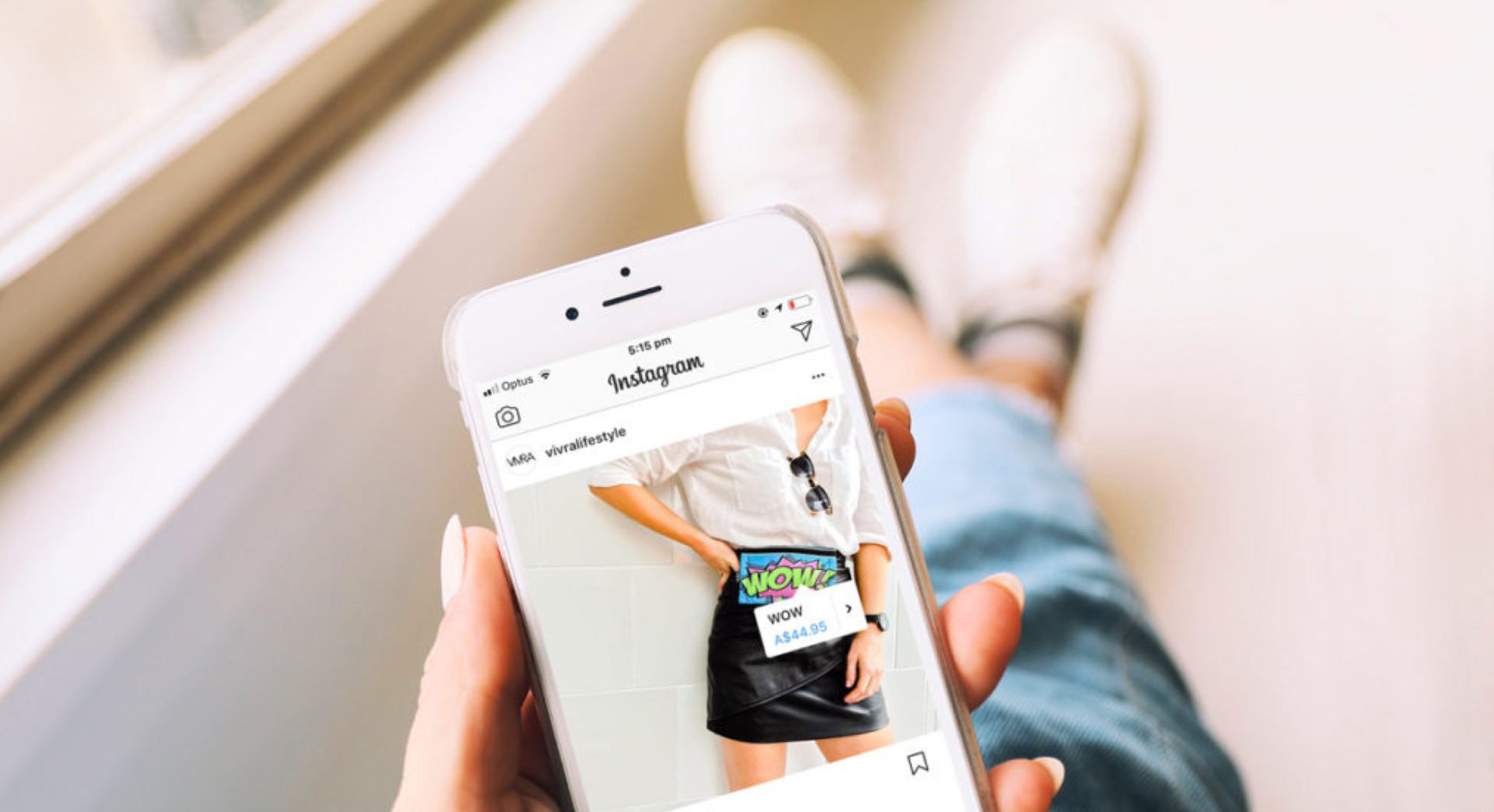
Now, that’s all changed. Instagram has recently added a Shoppable Posts option that allows small business to link directly to a sales page from a post. In other words, if you take a picture of one of your products, you can post it to Instagram and include a direct link to the product on your website.

Big change, right?

Here’s what you need to know to get going with Shoppable Posts.
First, as of the time I’m writing this, Shoppable Posts are only applicable to organic posts. That means you can’t promote a Shoppable Post. To get more traffic on your posts, you’ll need to make judicious use of hashtags to make sure that potential customers can find your content.

You’ll need to take some important steps before you can take advantage of Shoppable Posts. Here they are:

Instagram
  1. First, create an Instagram business profile if you haven’t already done so.
  2. Read both Instagram’s merchant agreement and their commerce policy to make sure that you understand them. You’ll need to stay in compliance at all times.
  3. Create a Facebook product catalog using one of the following:
  • Your Facebook business page
  • Your Facebook business manager account
  • Your Shopify account
  • Your BigCommerce account

If your product has country or age restrictions, you won’t be able to sell on Instagram. Of course, that might change in the future, but as of today it’s not possible.

Once you’ve taken these steps, Instagram will review your account and if you meet them, you’ll be given access to Instagram Shopping features. You can expect the review to take several days, but in some cases it can take longer if your account requires additional review.

When you’re approved, you’ll receive a notification. At that time, you’ll be able to activate product tagging in your account settings.

Instagram

Tips for Using Shoppable Posts

One of my favorite things about Shoppable Posts is that you can tag multiple products on each post. Here’s how it works.

On an individual photograph, you can tag up to five products. To do it, simply click on the product you want to tag. You’ll get a search box where you’ll need to enter the name of the product you want to tag. (The menu is linked to your Facebook product catalog.)

Once you’ve tagged all of your products, your post will be updated. People who view your photograph will see a link with the name of the product. When they click on it, they’ll be taken to your sales page where they can buy the product directly from you.
Even better, you can tag up to 20 products in a carousel. If you’ve got a new line of products that you want to feature, you can tag a bunch of them in one carousel.

One of the most important things you’ll need to do when you create a Shoppable Post is to choose the right hashtags. You can add up to 30 to each post. Make sure to include:

  • Your brand name
  • The name of the product
  • The category of the product
  • Key uses of the product
  • Key benefits of the product

It may require some trial and error to get it right. Adding new hashtags may help if your post isn’t getting the amount of traffic you expect.

The final thing you need to know is that once you have posted nine Shoppable Posts, you’ll get a shopping icon that will show up on your bio. Your products will also be added to the Instagram Store, where users who are interested in shopping can view your products along with others that are available on Instagram.

As you can see, Shoppable Posts are easy to create once you go through the initial sign-up process. They’re a simple way to attract new customers.

Instagram
Is Wi-Fi Marketing Right for Your Business?

Is Wi-Fi Marketing Right for Your Business?

You’re happy when you go into a business and they offer free wi-fi. Don’t you want your customers to feel that way too?

Let’s face it. Nobody likes having to eat into their monthly data allowance to look something up on the fly. When you’re home, your phone’s connected to your wi-fi. And, when you go into a business that makes their wi-fi available to customers, you’re grateful.

Guess what that means?

The free wi-fi you offer your customers is also – drum roll, please – a terrific marketing opportunity. Handle it right, and you can use that connection to build your list, gather information about your customers, and even improve your customer service. Here’s how.

Wifi Marketing

Using Wi-Fi Marketing to Build Your List

Do you have an email list? Granting customers access to your wi-fi is a great way to build your list.

You could open up your wi-fi without gathering information about your customers, but why would you? Most people will be willing to give up their email address to get some free wi-fi. You can tether your wi-fi login to a simple opt-in box that asks for the customers email address and first name.

Once you’ve got their email addresses, you can use them to send promotions and relevant content that will help turn them from one-time visitors into loyal customers.
Another option, if you’re using SMS marketing (or want to) is to ask customers for their mobile number instead of (or in addition to) their email address. A word of caution, though – I’ve told you before that adding one extra field to a form can decrease your conversion rate. My advice is to pick either an email address or a mobile number and go from there.

Wi-Fi Marketing Ideas to Try

Building your list is only the start of what you can do with wi-fi marketing. Here are some other ideas that you may want to consider.

Collect Customer Analytics

Having access to your customers’ mobile devices means that you can collect a huge amount of data about them without any fuss. Wi-fi marketing allows you to collect:

  • Demographic information
  • Purchasing behavior
  • Physical behavior (the frequency of their visits)

You can use the information you collect to tailor specific offers to your customers and send them notifications of upcoming sales and events.

Social Wi-Fi Marketing

Another option is to allow customers to log in to your wi-fi using their social accounts. You’ve seen this on lots of sites, I bet. Many customers will choose the convenience of logging in with an existing account over creating a new one.

You might wonder about this one. After all, it doesn’t allow you to collect email addresses or mobile numbers. Is it really worthwhile?

I’d say it depends. If your social media game is strong – and it should be! – then you can use your wi-fi login as a way of encouraging people to follow your social media accounts.

When people follow you on Facebook and Twitter, you get access to both demographic information and their personal interests. That data can help you do a better job of targeting them with marketing and offers.

Inform Customers

Wi-fi marketing offers you the ability to provide relevant and useful information about your business and products directly to your customers.

A lot of products have a learning curve. Whether you’re introducing a new product or offering up ideas of ways to use an existing one, your wi-fi marketing can help you prime your customers to buy from you.

It’s also a way of engaging with your customers on an ongoing basis. People like to feel connected to the brands they use. You can do that in a way that doesn’t seem pushy by giving people access to your wi-fi connection.

Think of it as wireless lead nurturing. Every person who walks into your business could turn into a long-term customer. Wi-fi marketing can help you move them down that road.

Provide Customer Service

In an ideal world, every customer would be thrilled with you and they’d buy from you for the rest of their lives.

But we don’t live in an ideal world. You know that.

Wireless marketing can allow you to follow up with customers after they leave your business and gather information about their experience. For example, you could send them a survey to complete. Or, you could simply touch base with a quick email or text.
Either way, you’re letting them know that you care about them and their experience – and that you’re willing to do what’s necessary to turn them into loyal customers.

Wifi Marketing
10 Marketing Tools You Aren’t Using – But Should Be!

10 Marketing Tools You Aren’t Using – But Should Be!

A marketer is only as good as the tools they use.

That’s easy to say, but it glosses over one of the real challenges that small business owners must face. With so many marketing tools to choose from, how do you know which ones are worthwhile?

It’s a good question – and I’m here to help with the answer. Here are 10 marketing tools that you aren’t using yet, but should be.

#1: Meltwater

Meltwater is a tool that lets you accomplish several marketing goals at once. With it, you can:

  • Monitor your brand in real time, including tracking brand mentions
  • Identify your best-performance keywords
  • Find the latest trends that apply to your business
  • Analyze your marketing campaigns
  • Create drafts of your publications days, weeks, or months in advance

Best of all, it collects all your results in one place so you can easily compare and evaluate your data and adjust your marketing campaigns accordingly. Pricing is based on your needs, and you can fill out their form to get more information.

#2: Google Alerts

Google Alerts is a tool that Google created to help businesses keep track of the latest information that’s relevant to your brand. You can log in to Google Alerts using your Google ID or Gmail address. Then, you can set up alerts as you choose.

Here are some of the things you can do with Google Alerts:

  • Track mentions of your brand
  • Track activity related to your top keywords
  • Track what your competitors are doing online

This is a free tool, and a good marketing option for beginners who want to wrap their heads around the web activity that’s most relevant to their companies.

Marketing Tools

#3: Simply Measured

Simply Measured is a social analytics tool that’s owned by Sprout Social. You can use it to dig into the activity on your social media accounts. For example, you can:

Here are some of the things you can do with Google Alerts:

  • Discover what interests your audience
  • Learn which content is driving engagement and interest
  • Identify emerging trends with advanced social listening
  • Collect detailed analytics to help you fine-tune your marketing campaigns

Simply Measured is one of the most powerful social analytics tools available. You can learn more and sign up for a free trial here.

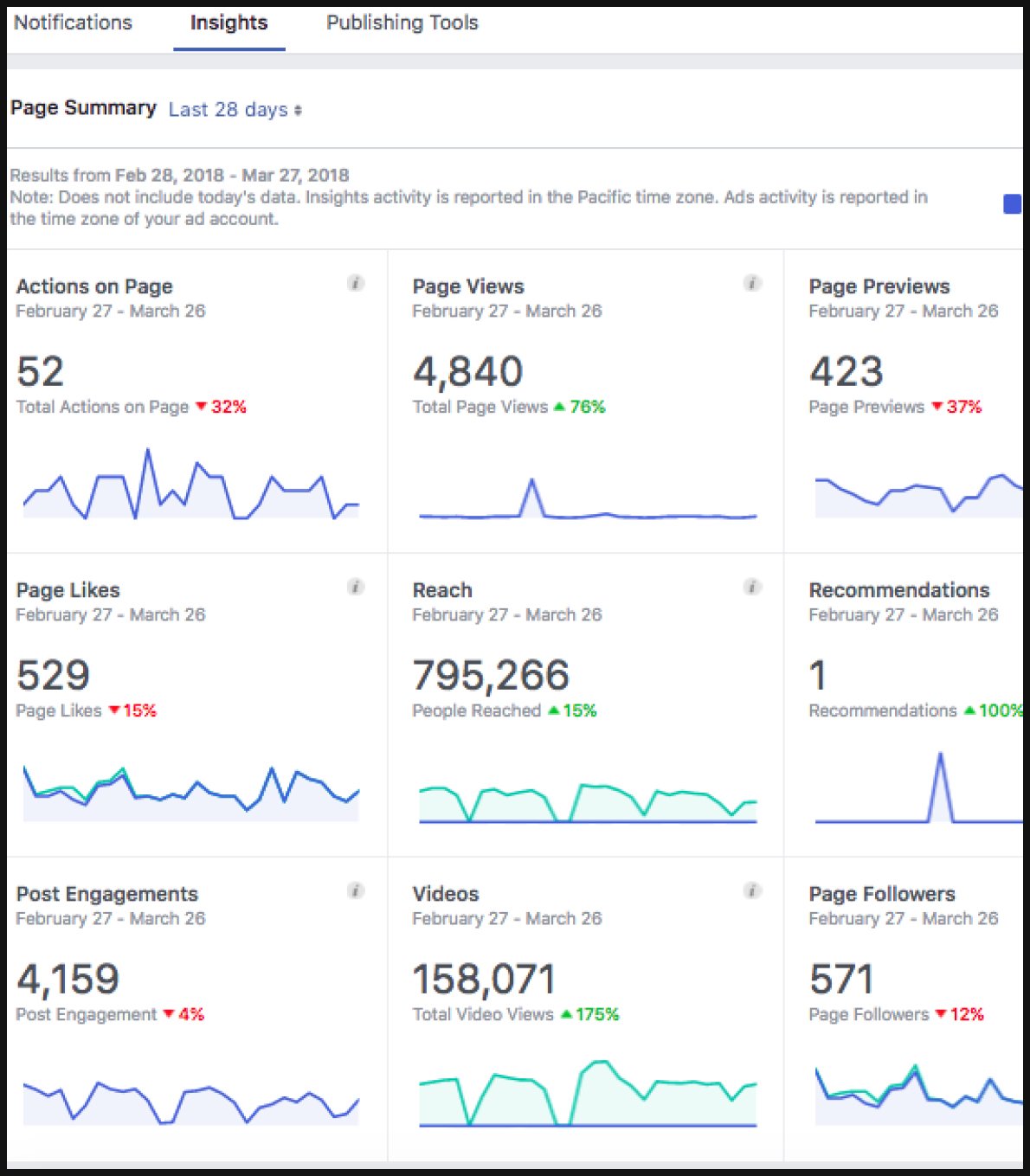
#4: Facebook Insights

Marketing Tools

Facebook Insights is a tool that Facebook provides to its business customers. It offers marketers an impressive collection of analytics and statistics that can help you fine-tune your Facebook ads. Some of the information you’ll get includes:

  • Gender, age, and geographical breakdowns of your audience
  • Information about how people are finding your page
  • Data about the people who click through to your website
  • Breakdowns of your ad spending, including each ad’s reach and engagement
  • Information about which posts perform the best

It’s a deep well of information you can use to refine your Facebook ads – and you can apply the insights to your advertising on other platforms, too. Facebook Insights is a free tool. You can access it by clicking the Insights tab on your business page.

#5: Promorepublic

Promorepublic is a social media scheduling tool that allows you to schedule your posts easily across multiple platforms. They also provide some cool content creation tools, including:

  • More than 6,000 handcrafted templates
  • More than 100,000 images

Their services are broken down into self-service and full-service, and from there you can add options that include social monitoring and intelligent ads. There’s a free trial available for the self-service model. You can get more information here.

#6: AdEspresso

As its name suggests, AdEspresso is like a shot of caffeine for your advertising strategy. They have a huge gallery of advertising examples you can browse online. (As of this writing, the gallery was being updated, but they also offer free eBooks with sample ads. You can find them here.)

They have tools to help you create, manage, and analyze your ads. They also have a great blog and other educational material to help you perfect your ads and grow your business. You can get a 14-day free trial. After that, they have multiple tiers available, which you can learn about here.

#7: Promo

Promo is a video creation tool that even people with no video production experience can use to create professional-looking videos to post on their websites or social media. Users get access to:

  • A library of tested video templates to use
  • Access to thousands of images
  • Tools to help you create videos perfect for Facebook, Instagram, and more
  • Top-notch customer service

You can get a free trial, and after that they have three plan tiers to choose from. Find more information here.

Marketing Tools

#8: Canva

Canva is one of my favorite content creation tools. They offer an impressive collection of things to help you create memorable social media posts, including:

  • A library of professional templates for everything from Facebook posts to newsletters
  • Easy drag-and-drop design features
  • A huge collection of images and graphics
  • Photo editing tools

Canva is simple to use even for people with no design experience. Best of all, it’s completely free. You can create an account by signing up with Facebook or Twitter. Learn more here.

#9: SpyFu

SpyFu is an espionage tool for marketing. Using it, you can track your competitors marketing activity, including:

  • Every keyword they buy on AdWords
  • Every ad variation they’ve tried
  • Every rank change

Using it, you’ll get a huge amount of information that you can use to piggyback on your competitors’ ideas and – just as importantly – find holes in their marketing strategies. They offer three plans and all of them come with a 30-day, money-back guarantee. Learn more here.

Marketing Tools

#10: Hemingway App

Hemingway App is an editing tool that can help you improve the quality of your written social media posts and ads. When you plug text into the app, it will highlight it to show ways of improving it. For example, it targets:

  • Overly long or complex sentences
  • Long words
  • Adverbs and weak phrases
  • Passive voice

You can format your text right from the toolbar. It’s a free desktop app and you can see examples of how it works and download it here.

Marketing Tools

Your tools are waiting…

The tools I’ve mentioned here are my very favorite marketing assistants. You may not use all of them, but I encourage you to check them out and add a few to your toolbox.

Top 10 Signs Why You Need to Redesign Your Website

Top 10 Signs Why You Need to Redesign Your Website

Is your website showing its age?

It’s a new year and many of us humans are making resolutions to be and look better. And guess what? You need to think about whether your website needs to make a resolution, too.

Let’s face it. Many of us look at website redesign as a hassle. If our current websites are up and running – even if they’re not perfect – we put off redesigning them because we think it’s not a priority.

Spoiler alert: it should always be a priority.

Having an out-of-date website can erode trust with your existing customers and make it difficult to attract new ones.

Does your site need a facelift in 2019? Here are 10 sure-fire signs that it does.

It’s Not Mobile Responsive

I know you probably think I’m beating a dead horse with this one, but mobile responsiveness is no longer an option in 2019. It’s a necessity.

Google penalizes sites that don’t adjust to the size of the device they’re being viewed on. And the truth is, this is an easy fix. There’s no excuse not to do it – and it can actively hurt you if you don’t.

Your Site Is Difficult to Update

You might use the difficulty of updating as an excuse NOT to update, but in fact, it’s a clear sign that you must update – and right away. It’s the best way to be sure you can stay on top of future Google updates and technological improvements.

Updating from whatever it is you have now to a WordPress site where you can easily change your theme and add plugins as needed will make your life easier in the long run.

Your Site Is Difficult to Update

It Looks Outdated

There are lots of little things that can make a website look out of date. For example, which version of the Twitter and Instagram logos do you have on your blog or homepage? If your Twitter logo has the old bird with the tuft of feathers on its head, your site may look like it’s from the dark ages.

Trends in web design are constantly changing. If your site looks like it was designed in the early 2000s (or even the early 2010s) then it’s time to embrace the present and update it.

Your Conversion Rate is Too Low

There are lots of factors that can contribute to a low conversion rate, including your social media presence and marketing strategy. However, there’s no question that your website – its design, loading time, usability, and other factors – plays a role.

It’s an especially good sign that your site needs updating if you’ve tweaked your marketing campaigns and you’ve still got a low conversion rate. Something’s scaring potential customers away – and if it’s your website, there’s only one way to fix it.

You’ve Got Autoplay on Your Website

Autoplay is dated and annoying, but there’s a more important reason that you need to ditch it in 2019 as part of your website redesign. It is very likely contributing to a slow page load time. I get that you were probably eager to have people watch your video or listen to your audio at the time of your LAST redesign, but it’s time for a change.

Honestly, I think the irritation level of autoplay far outweighs any potential benefit. You’re much better off putting your video above the fold with a killer thumbnail and a compelling pull quote than you are autoplaying it

Your Branding Isn’t Current

Have you rebranded your business since the last time you updated your website? If so, that means that your website is out of sync with your branding – and visitors aren’t getting a true picture of you and your company when they visit it.

Even if your branding changes are minor – such as an updated logo or tagline – it’s still worth redoing your website to match it.

Your Branding Isn’t Current

It Takes Forever to Load

You’ve probably heard the statistic that says that human beings have a shorter attention span than a goldfish. It sounds absurd, but when it comes to how quickly a site loads, it’s true.

Not only that, but Google penalizes sites that take too long to load. You can use their Page Speed tool to check your site’s loading time.

Your Web Design Isn’t Consistent

Perhaps your last web redesign was ten years ago and in the interim, you had a different designer make a few tweaks to the design. Maybe you even did a bit of programming yourself. If that’s the case, you may have a Frankensite that looks like it was assembled by committee – not a good thing.

If your fonts, colors, menus, and other design elements are a hodgepodge and not consistent throughout, a redesign can help you present a cohesive design that will attract new customers instead of frightening them.

Your Google Rank is Too Low

Google prioritizes well-designed, quick-loading sites with great content. If it’s been a while since your last redesign, the chances are good that your site isn’t ranked as high as it could be on Google.

It’s an especially big red flag if your ranking has slipped despite increased social media visibility and a higher-than-usual marketing budget. Don’t ignore Google‘s response to your site. It’s not going to get better if you wait to update it.

It Just Doesn’t Look Good

This last one might seem obvious and unnecessary, but I’m including it because a whopping 48% of consumers say that a company’s website is the most important factor in determining credibility. In other words, an ugly or poorly designed site can scare potential leads away.

If that’s not enough to scare you into updating your site, I don’t know what is!

give your website a new look
Top SEO Trends Making the Biggest Impact in 2019

Top SEO Trends Making the Biggest Impact in 2019

SEO changes are coming one after another – like waves. And in 2019, you’ve got two choices: sink or swim.

Sound dramatic? Maybe it is. But the truth is that it’s getting more and more difficult to stay on top of the shifting tides of SEO. Google’s updates its algorithm regularly and doesn’t share the changes – and if you want your website to stay visible and maintain its rank, you’ve got to be ready to move with the current.

So, with that in mind, here are the biggest SEO trends of 2019 as I see them – and some tips about how to use them to your advantage.

Voice Search

Voice Search

I’m starting with a big one that many small and medium-sized companies are still ignoring. Voice search isn’t going anywhere – and in fact, it’s going to become increasingly important in 2019.

Why? Because pretty much all of us are using voice search in some way. Whether you’re starting a mobile search by saying “OK Google” or calling on Alexa, Cortana, or Siri to help you find what you need, you’re using voice search. And, estimates are that 50% of all searches will be voice searches by next year.

And guess what? That means your customers are too. One of the best ways to capitalize on this trend is to optimize your site with voice search in mind. That means incorporating common questions into your content – because your customers are asking questions and your website should answer them.

Mobile-First Indexing

Google’s mobile-first indexing is still relatively new, but only a fool would believe that it won’t increase in importance in 2019. Right now, about 60% of all searches are mobile – and that number’s only going to go up.

How do you take advantage of this trend? First, make sure your site is mobile responsive. Honestly, at this point there’s no excuse for it not to be. Next, think about how your site’s design will impact mobile users. You want a clean design that’s easy to use. That means single column next, right-sized buttons, and other mobile features like direct dialing.

You may also want to think about accepting mobile payments in your store, if you have one. The idea is to make it easy for mobile customers to patronize your business.

Structured Data

SEO is in an interesting place right now. We’re still heavily mobile-dependent, but the increase in voice searches and use of artificial intelligence means that we all need to be thinking about how our websites can be easy to access as AI increases in importance.

One way to do that is to use Schema and other structures to organize your data. Things like information architecture, tags, metadata, and structured mark-up can all help ensure that your site is easy to crawl and index.

I know that all sounds very technical, but an experienced SEO can help you navigate the tech requirements while still providing a site that’s user-friendly, readable, and engaging.

Brand as a Ranking Signal

SEO is no longer just about what’s on your website. It’s also about how people are talking about you on social media sites and other places online – and those brand mentions are now having a big impact on how Google perceives your company.

If you’re not already tracking your social mentions, now is the time to start doing it. Following other brands on social media will reveal that some of them are responding when people mention them – and they’re making a big impact doing it. Even a word of encouragement or a quick joke can make a huge difference in how people think of you. Awario is a great tool for tracking your mentions.

Focus on Expertise, Authority, and Trustworthiness

The big trio of online impact is E-A-T – Expertise, Authority, and Trustworthiness. Technically, E-A-T isn’t part of Google’s algorithm, but it is a guideline for Google’s algorithm raters. That means that you can’t afford to ignore it.

What you can do to offer E-A-T to your site’s visitors is provide content that’s:

  • Meaningful
  • Useful
  • Relevant
  • Authoritative
  • Deep

You don’t need to write 5,000 word blog posts. However, it is very helpful to cover the topics that are in your area of expertise in depth. If a topic is too big or complex for a single blog post, do a series of posts (or a series of videos) to cover it.

You can demonstrate E-A-T by creating a system of internal links to help visitors to your site navigate the information that’s available and easily find content that’s related to what they’re viewing.

Site Speed

Speed is another topic you may think I’ve covered too much – but when I repeat myself, it’s only because I know how important it is and I want to make sure that you’re not overlooking something that can have a huge impact on your SEO.

There’s no such thing as a website that loads too quickly. All web users are impatient and mobile users are more impatient than most. Very few are going to wait longer than five or six seconds for your site to load. Anything that might be slowing your site down needs to go. That means:

  • Auto play audio and video
  • Flash
  • Outdated plug-ins

You can and should use Google’s PageSpeed Insights to check your site’s loading speed. Then, do whatever you need to update it and speed it up, so that users don’t need to think about the time it takes your site to load – because they’ll already be looking at your awesome content.

Site Speed